- Role
- Product Manager, sole PM for Amp
- Prepared for
- General circulation
Turning a blockchain data engine into a product enterprises could evaluate
On Amp, an enterprise blockchain data platform, our product designer Ali Kamal and I reframed every step the AI takes, so it’s visible and clickable, and so the AI stops to ask when it isn’t sure. With the team, I also narrowed the verification claim to “cryptographically verified at ingestion, governed thereafter.” We delivered the platform demo.
Problem
Amp had strong engineering and production-quality data, but no product, no demo and no path to enterprise customers. There was no strategy yet, so the CTO asked me to write one. I was Amp’s sole PM for about 15 months (Jan 2025 – Apr 2026). The platform demo was the last 3 months of that, with one front-end engineer.
What I did
I defined the strategic direction for Amp’s user experience as a product, then wrote the specs that got a six-person squad to a demo: one front-end and two full-stack engineers, a QA and engineering manager, our product designer Ali Kamal, and me. Two of the decisions on this sheet are about trust: making the AI’s work checkable, and making the verification claim match what the system does.
Outcome
We delivered the platform demo. Amp wasn’t in production when I left in April 2026, so there are no production customer metrics to cite.
In plain terms
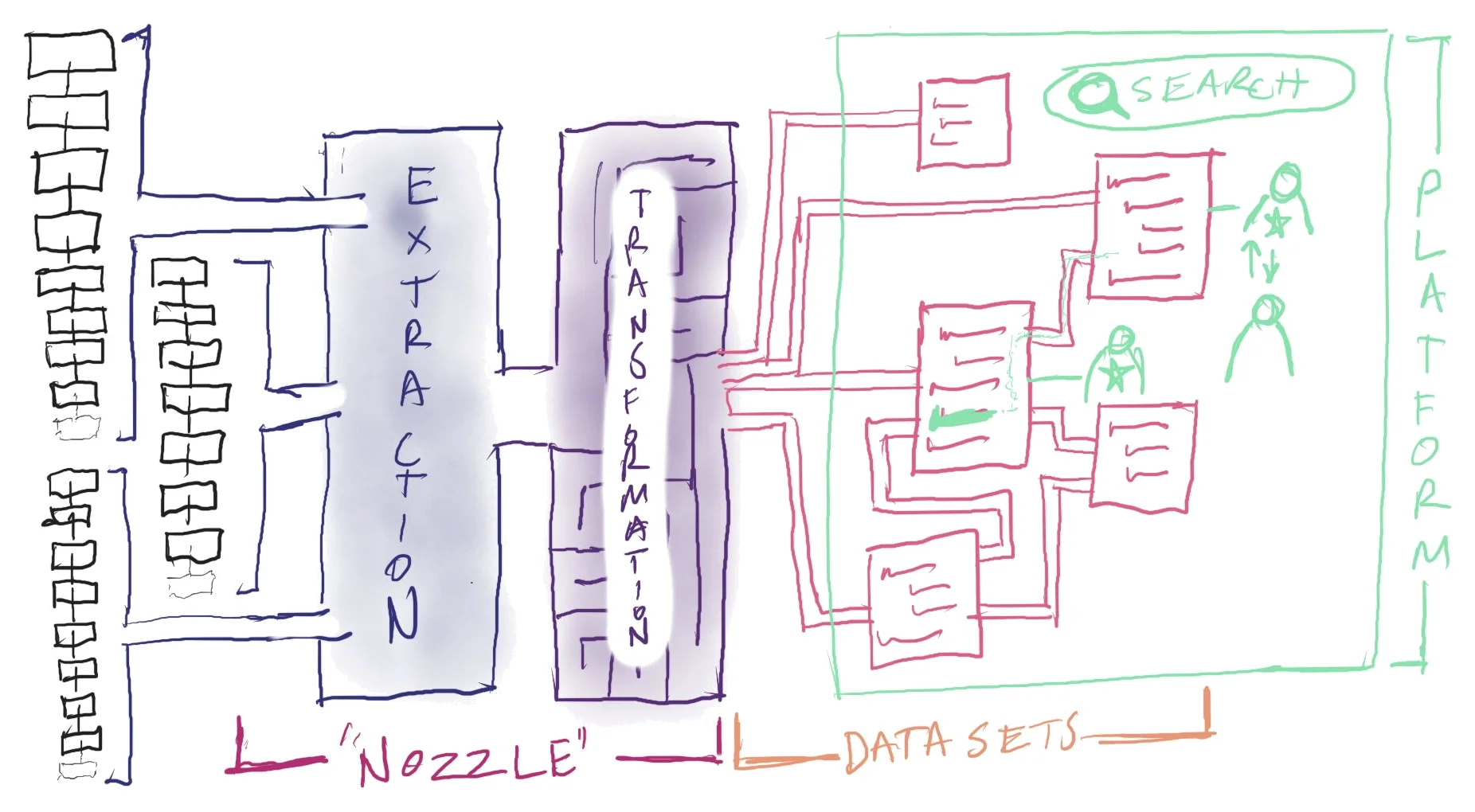
Amp is Edge & Node’s enterprise blockchain data platform. Nozzle, the ingestion engine, streams blockchain data into Amp; Amp turns it into datasets you can query with SQL and pushes it on to databases. Amp was built for two audiences. Analysts write SQL and build dashboards. Enterprise institutions, in compliance, risk and operations, think in SLAs, audit trails and governance, and for them an impressive answer isn’t enough. They need to see where it came from.
Glossary 6 terms
- SQL
- The standard language for asking questions of tables of data.
- Ingestion
- The step where data is read off the blockchain and streamed into Amp. Nozzle is the engine that does it; it’s a separate part of the pipeline, not an earlier name for Amp.
- Block headers, event logs
- The records a blockchain keeps for each block and for what its programs did.
- RBAC
- Role-based access control: who is allowed to see or change what.
- Lineage
- A record of where data came from and every step that transformed it.
- Audit trail
- A permanent log of who did what, and when.
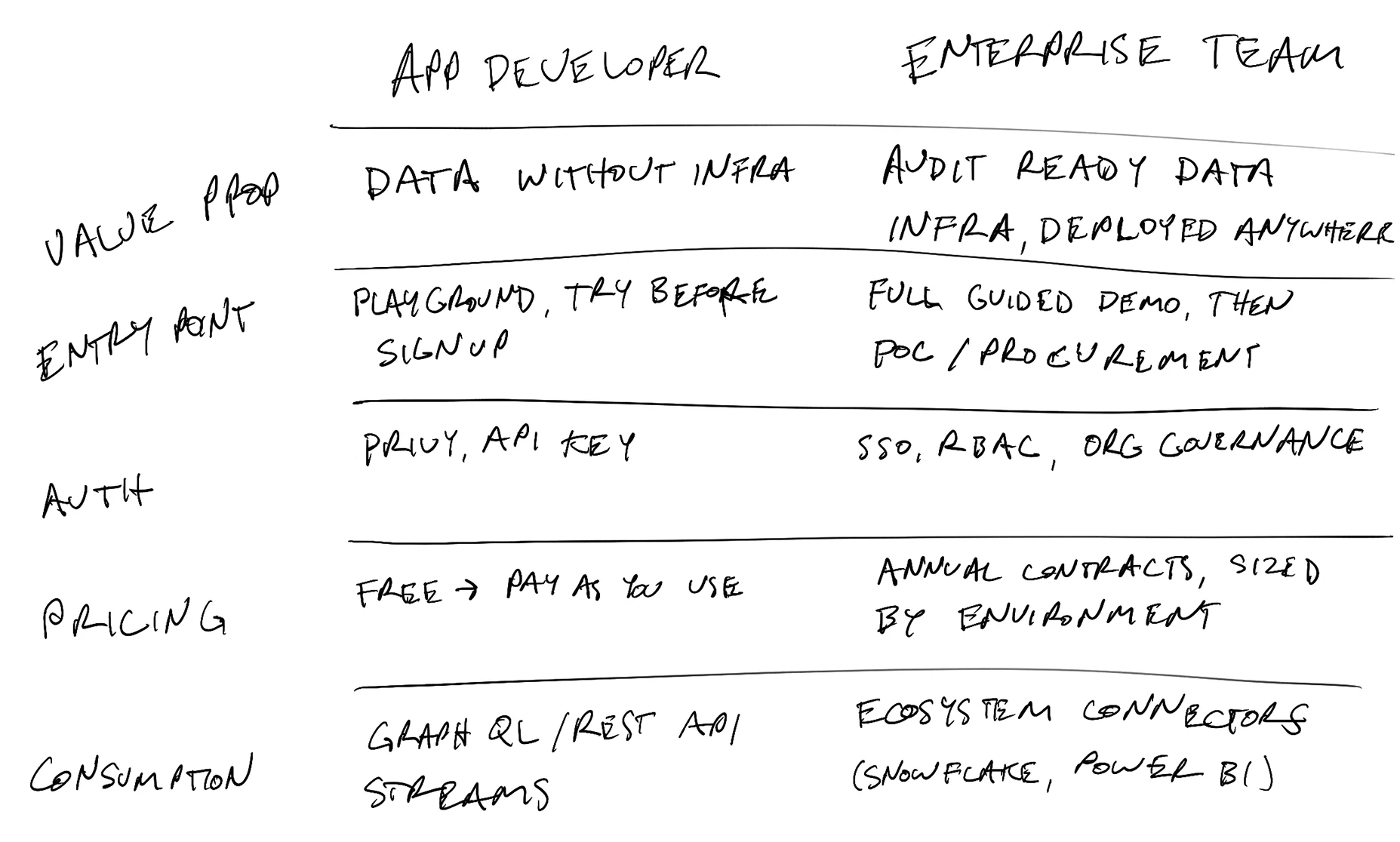
Sell to enterprises first: “evaluate and procure,” not “explore and contribute”
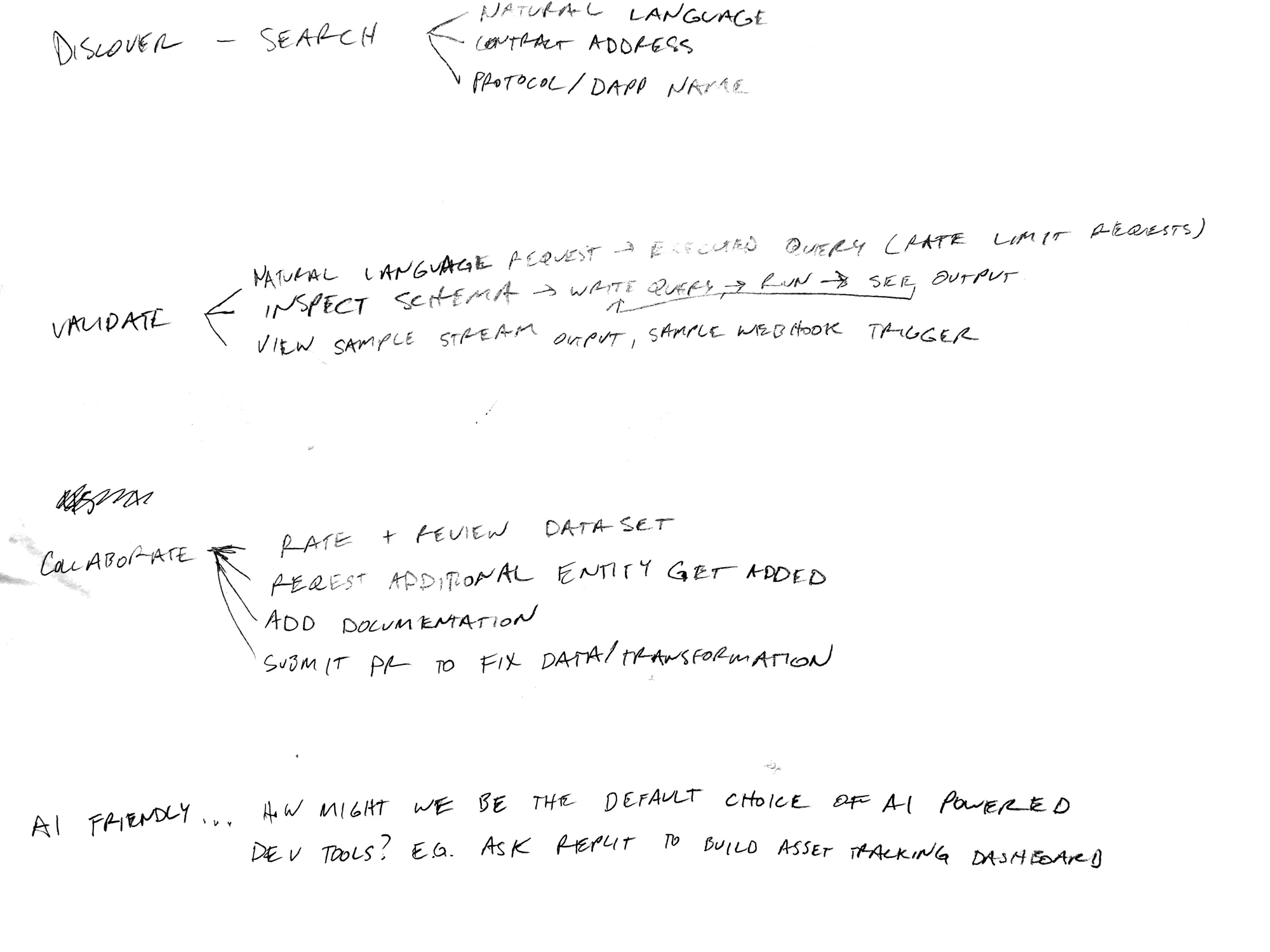
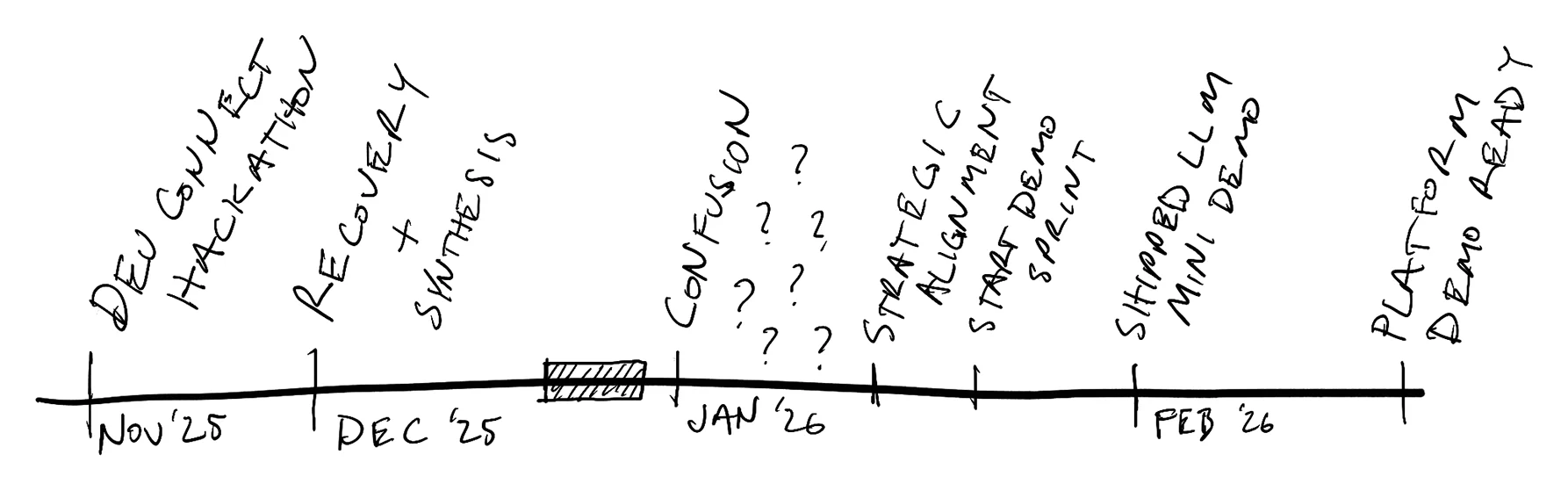
I’d researched and designed the original vision: a public, self-service SaaS for application developers, built around network effects like dataset ratings, contributions and bounties. In November 2025, at Devconnect and ETHGlobal in Buenos Aires, my interviews with developers and leadership’s enterprise conversations pointed the same way. After weeks of synthesis through December, we finalized the enterprise-first focus in January 2026. The self-service vision wasn’t wrong, but it was premature. The catalog and playground survived. The community layer and the network-effects model were shelved.
I wrote the Q1–Q2 2026 strategic direction document, which became the team’s operating plan, and got the CFO, CMO, CTO and engineering leadership behind a single bet. I also kept an explicit list of what not to build yet, each item with a reason: full authentication, account details and settings, billing, the API keys UI, user-published datasets, public profiles, data services configuration and subgraph integration, plus mobile optimization.
| Feature | Why skip it |
|---|---|
| Full authentication | Email capture is enough for demo and lead gen |
| Account details/settings | No one’s managing an account in a demo |
| Billing | We’re not charging yet; adds complexity without value |
| API Keys UI | Enterprises will ask, but we can say “coming soon” |
| User-published datasets | Publishing flow is a separate use case; focus on “discover and query” |
| Public profiles | Nice-to-have, not demo-critical |
| Data Services configuration | Show that endpoints exist, but skip the config UI |
| Subgraph integration | Graph ecosystem complexity; not relevant to enterprise buyers (moves up if prospects ask) |
Make every AI step visible and clickable, and stop to ask when unsure
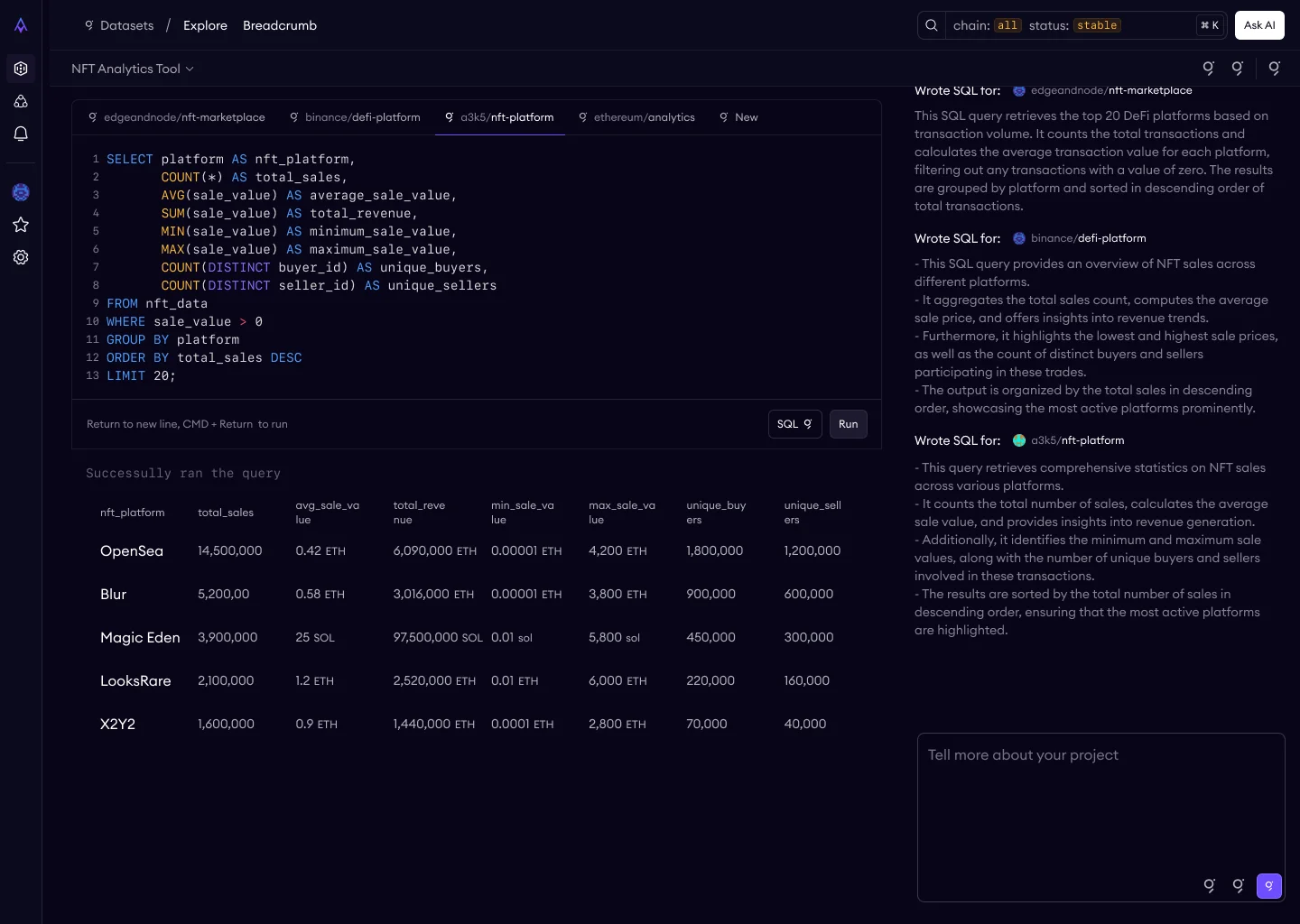
Ask AI let people ask questions about blockchain data in plain language. My first concept, v1, was a text input that generated SQL for the person to review and run. It broke down on ambiguous questions, and on questions that spanned more than one dataset.
For v2, our designer Ali Kamal and I took a different approach: the chat orchestrates the workspace. Every AI action shows up as a step in the chat, and clicking a step takes the main workspace to it. 1 Choosing a dataset opens that dataset’s page. 2 Writing a query opens the playground with the exact SQL that ran. 3 Showing results opens the results, and every earlier step stays in the chat to go back to. So enterprise buyers can see exactly what query ran.
The trickiest case was when Ask AI wasn’t sure it had picked the right dataset. Instead of confidently serving up an answer (and hoping nobody noticed), Ali and I designed it to stop and ask, “How does this data set look?” The person could confirm or redirect it in a quick back-and-forth before any query ran. I like this pattern a lot, because the AI’s uncertainty turns into a simple question instead of a wrong answer someone has to catch. It’s the same shape as a manual-review queue: low confidence goes to a person before anything runs.
- A screen, step or state
- A decision
- Double line: done by the system (here, the AI)
- Dashed: not shown, or not claimed
- Pin, referenced in the text
The design equivalent of “don’t trust, verify,” applied to the AI itself.
Claim only what the system does: verified at ingestion, governed thereafter
When I audited a conference talk submission, I found it overclaimed. It implied per-query “cryptographic proofs.” What Amp actually does is cryptographically verify block headers, transaction data and event logs at every block during ingestion. That matters, but it happens once, as the data comes in, and not on every query.
I worked with the team to reframe the positioning as a two-layer trust model. 4 Verifiable extraction: the chain data is checked as it’s ingested. 5 Enterprise governance from then on: role-based access, audit trails, versioned dataset definitions and lineage. 6 Per-query proofs: no longer claimed. We landed on “Cryptographically verified at ingestion, governed thereafter,” and each dataset page got a status & verifiability section to match.
We delivered the demo; I left before production launch
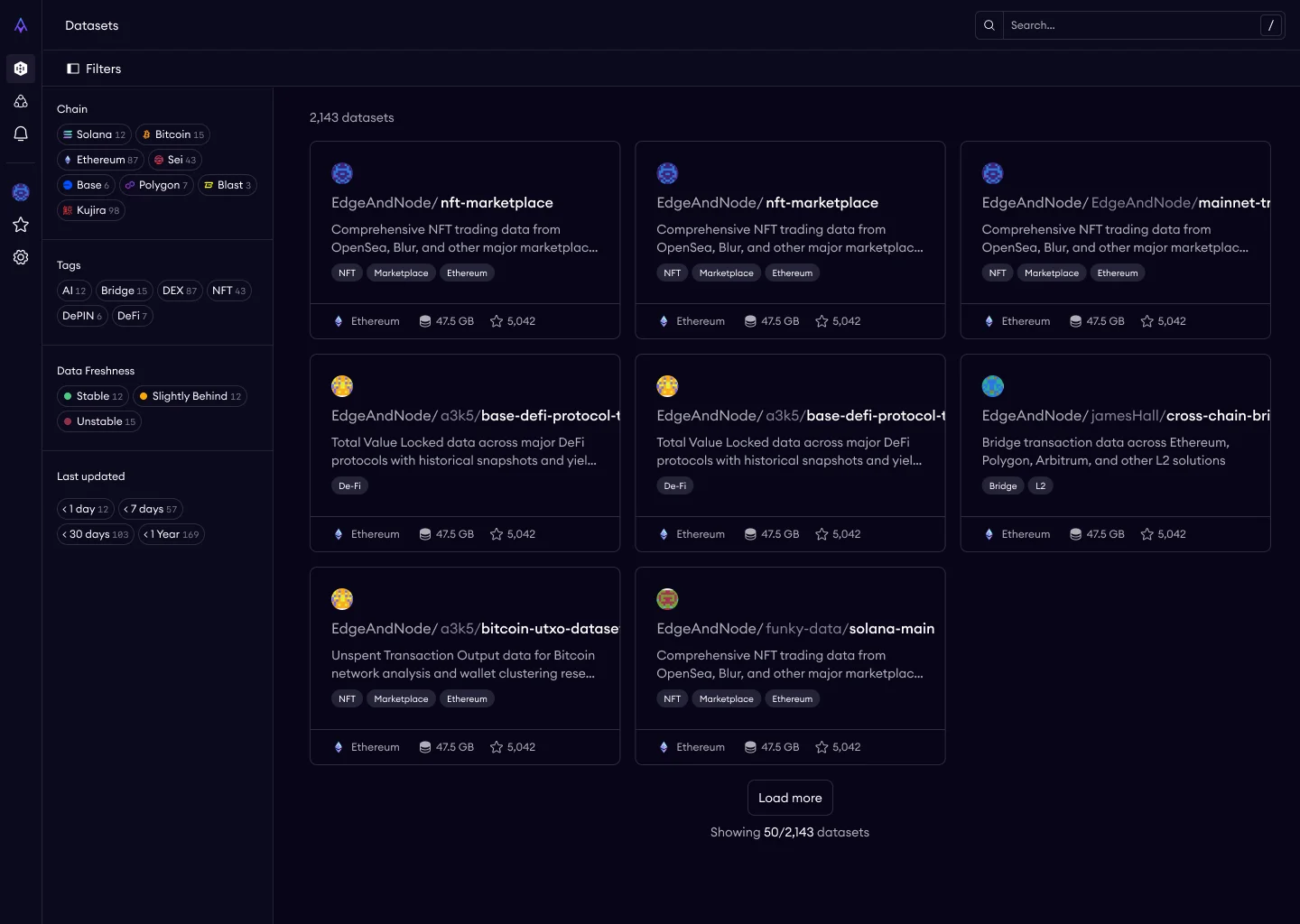
We delivered the platform demo. Amp wasn’t in production when I left Edge & Node in April 2026, so there were no production customers. The demo was built around what I learned at the ETHGlobal hackathon in November 2025, interviewing developers right after they’d spent hours building with Amp. One team was building a gas station that distributed gas across many chains; another was testing whether they could build quantum-resistant cryptography. First, the playground was what made it click: developers who could query real data understood the value almost instantly. Second, discoverability mattered more than I expected, which moved the catalog from “nice to have” to “the front door.”
What I learned: know when to kill your vision. Letting go of the network-effects work wasn’t easy, but the parts that survived the pivot were stronger for being tested against a different audience.
Smaller product decisions I made on Amp
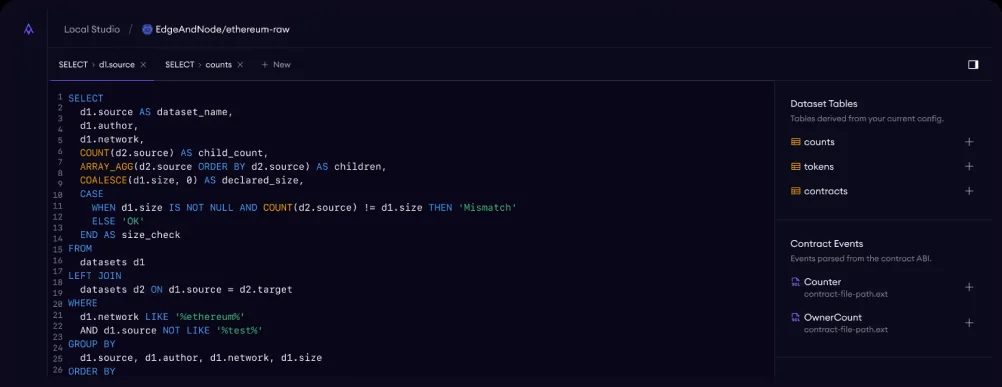
- Demo architecture. Datasets → Dataset Detail → Playground, and nothing else before the demo.
- A public catalog. Unauthenticated, and searchable by protocol, chain, tags and keyword.
- No cold start. Every dataset shipped with a working example query preloaded in the playground.
- Errors as design. I specified three tiers of error handling: syntax, execution and timeouts.
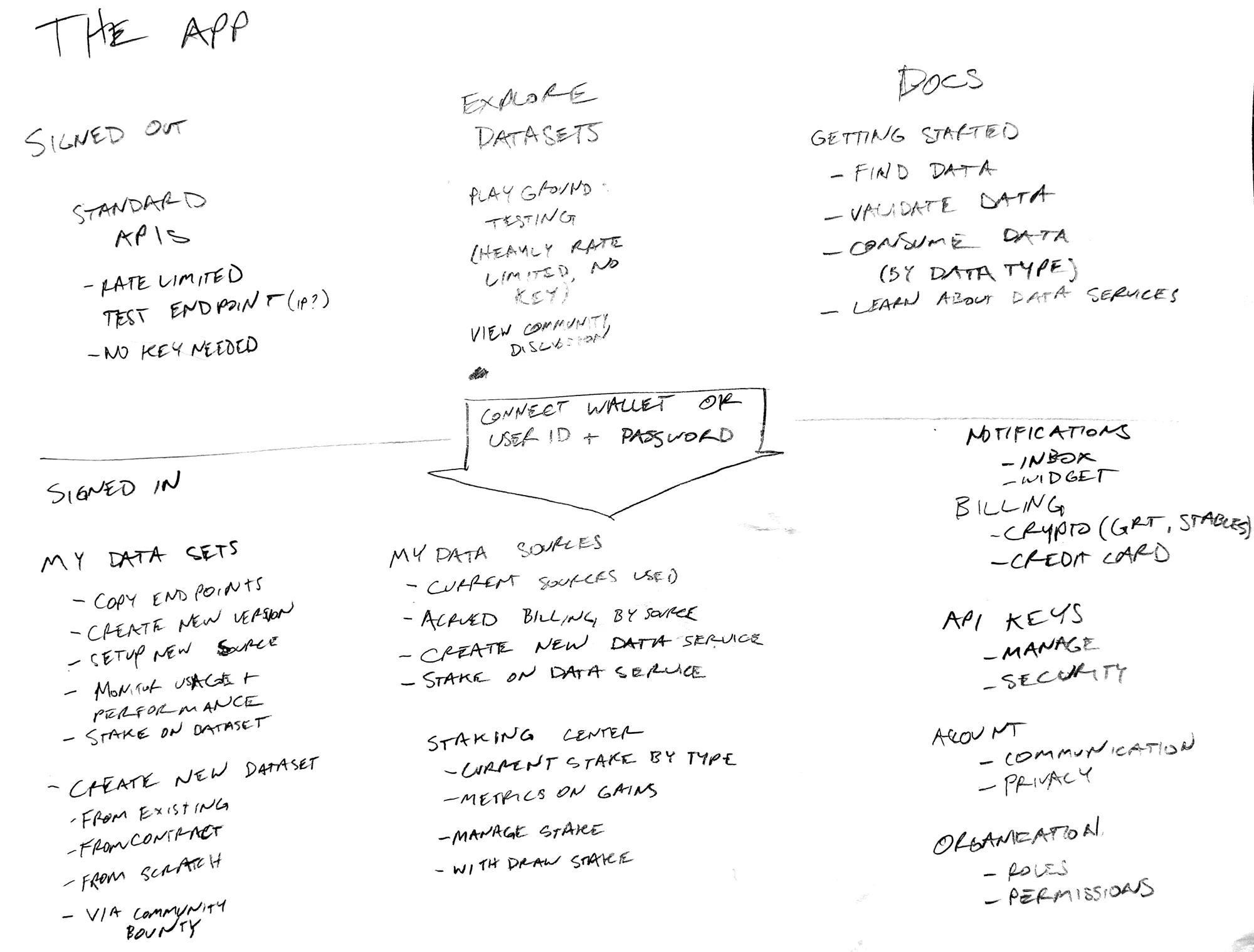
- IA at the auth boundary. Public datasets and documentation on one side, the private account area on the other.
- Account model. I explored three account models and chose Organization → Team → Project, following GitHub, dbt Cloud and Terraform Cloud. I deferred project-level RBAC on purpose, until enterprise demand showed it was needed.
- Lineage as text. Kept as structured text for v1 instead of a visual graph.
Working sketches
3 sketches, by JamesMy original working sketches from the demo push, shown as drawn. The paper sheets were photographed, with only their exposure and contrast adjusted.
SK-02The original self-service vision on paper: discover, validate, collaborate. The collaborate group is the community layer the pivot shelved. Photographed; exposure and contrast adjusted. Sketch: James SK-03The app split into signed-out and signed-in areas. The IA kept that split at the auth boundary. Photographed; exposure and contrast adjusted. Sketch: James SK-04The demo push as a timeline: from the hackathon, through synthesis and a stretch of confusion, to strategic alignment and a ready platform demo. Sketch: James